Transforming a Developer-Driven Monolith into a User-Centric Workspace
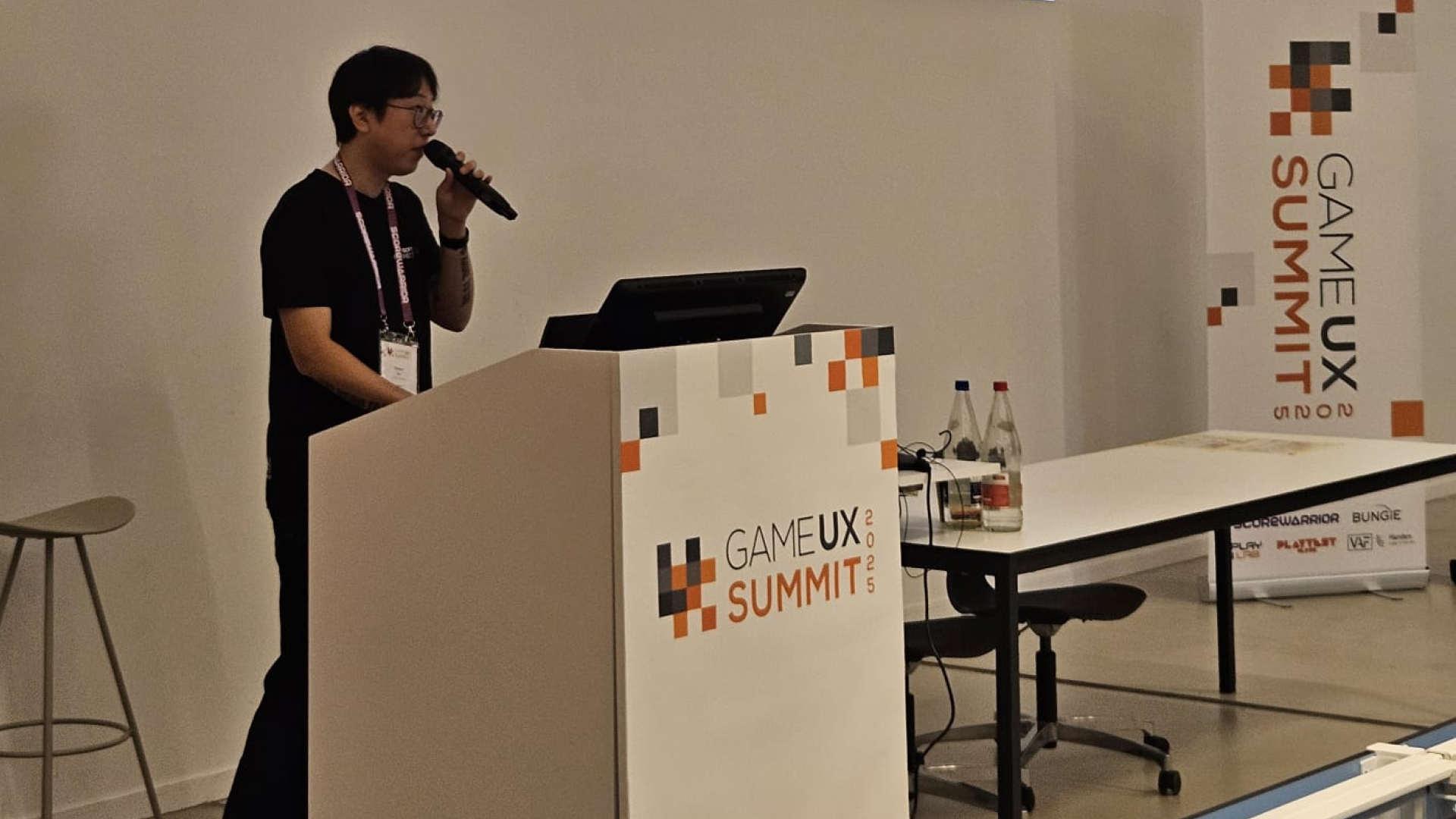
Note: This case study is adapted from a talk presented at the Game UX Summit 2025 in Antwerp, Belgium, co-delivered with my fellow designer, Mihyun Ko.
Role
Senior Product Designer
Team
Designer - Mihyun Ko
Product Owner - Lea Lüttgens
Developer - Christian Sebra, Xia Yu "Shirley" Feng, Jia Xun "Frost" He, Mohamad Rahal, Ulf Persson
Quality Assurance - Olena Illienko, Andrii Romanenko, Oleksii Okhonko
User Researcher - Natali Rein
UX Writer - Myriam Forbes
Timeline
2020 - Present
Platform
Web
The Backbone of Ubisoft PC Games
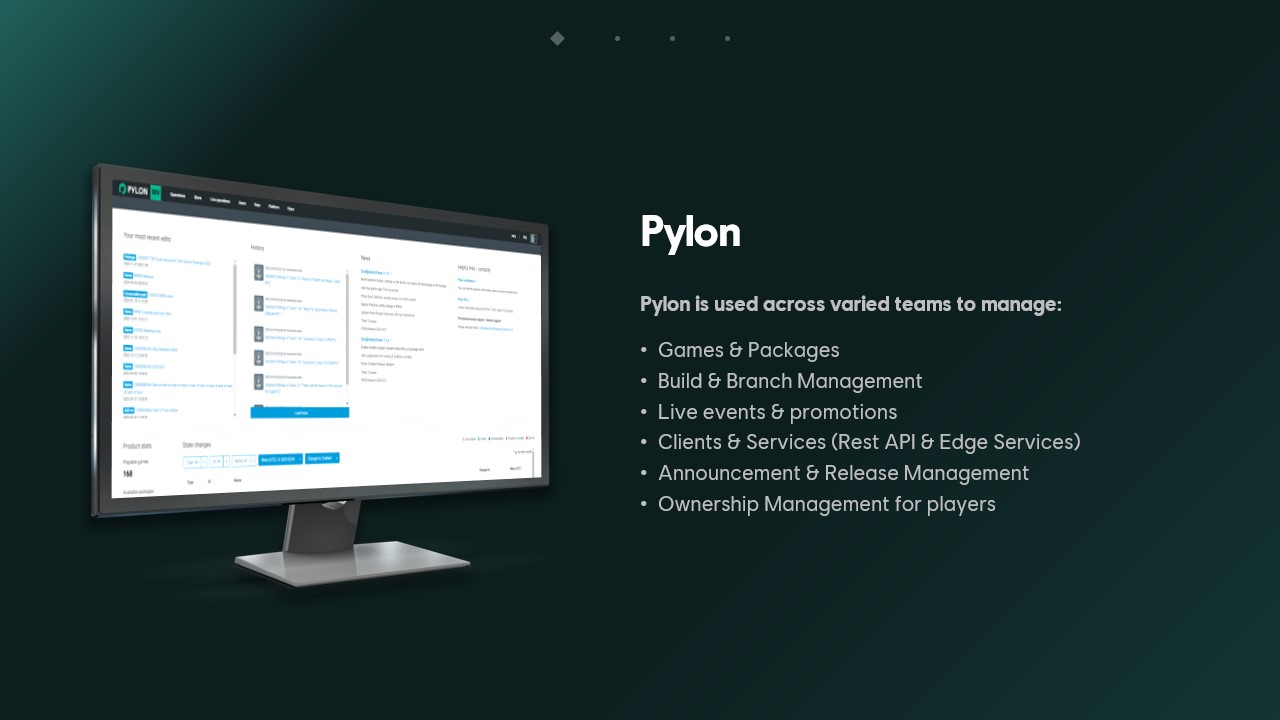
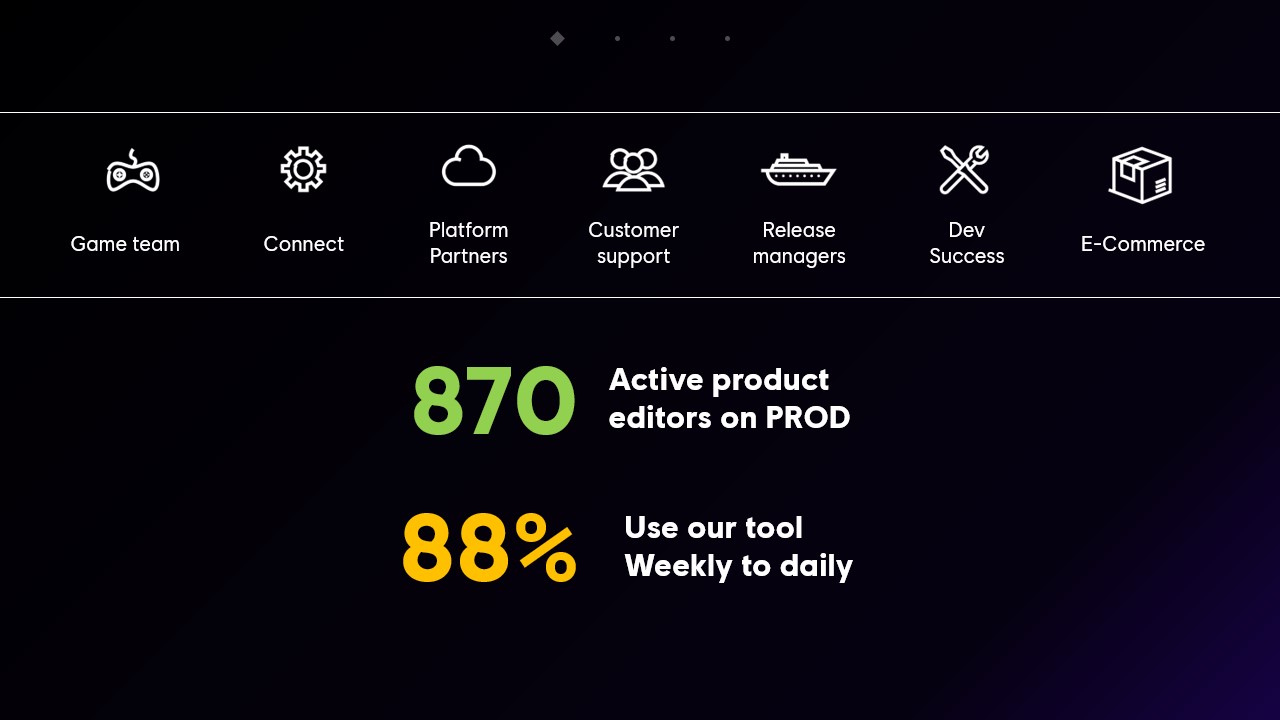
Pylon is the foundational "monolith" tool in Ubisoft used by over 800 internal experts to manage every Ubisoft game on PC—from branches and builds to add-ons, such as DLC (Downloadable Content) and in-game currency. However, as the system grew over the years, it became overwhelming and visually outdated.

Our journey
This project was a major collaborative effort within the Ubisoft Connect Tools team. My teammates, Mihyun Ko (Product Designer), and Natali Rein (UX Researcher) laid the critical groundwork by leading initial user research since 2021, defining personas, and restructuring naming standards (the "logic" of the system).
My Role: I joined the initiative in 2023 to translate these deep structural insights into a modern interface. My focus was on:
- UI Redesign: Overhauling the legacy developer-centric views into intuitive, task-oriented dashboards.
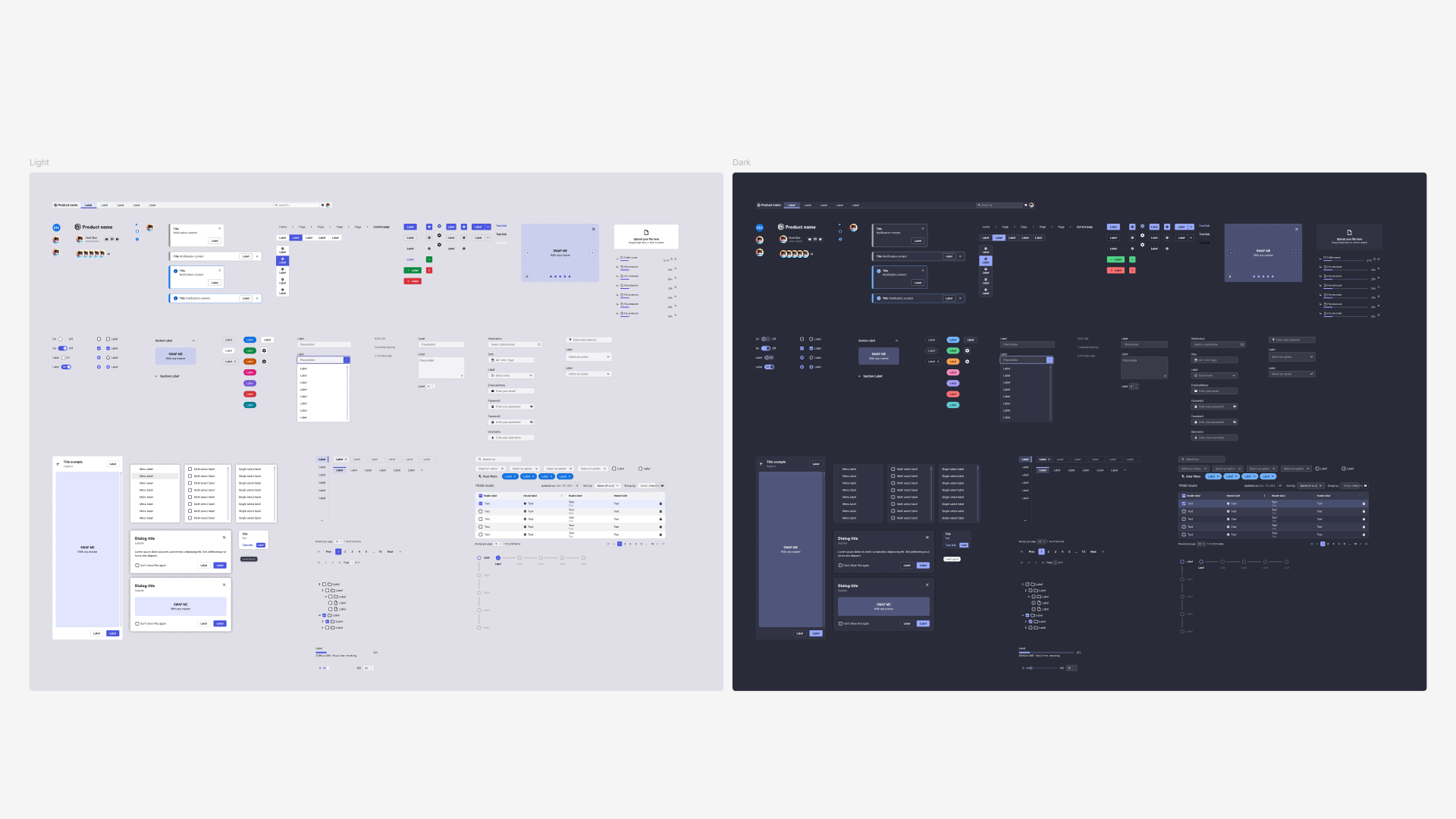
- Component Modernization: visually refreshing the tool using our latest Design System library, Online Services Tooling Development Platform (OSTDP) for consistency across the Online Services Console environment.
- Experience Refinement: Polishing complex workflows—like product creation and branch tracking—to ensure they were "fail-safe" for high-pressure production environments.
Beyond the "Developer-First" Mindset
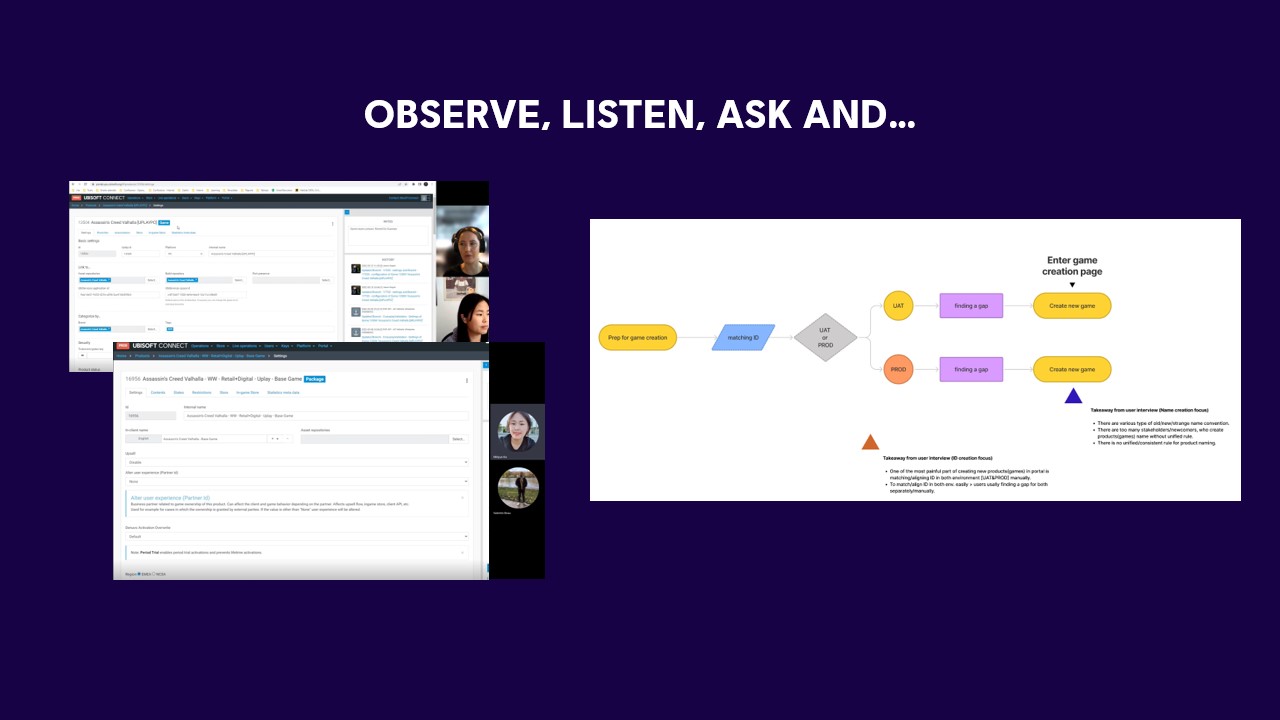
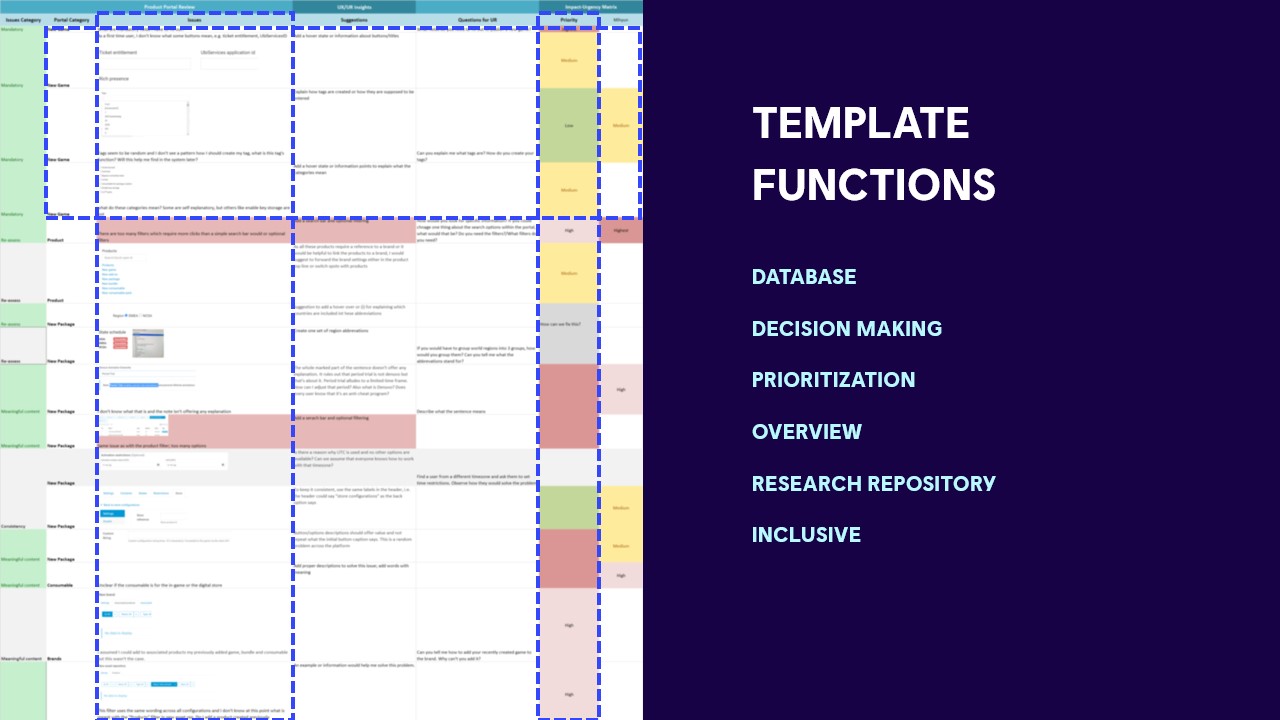
Pylon was originally built by developers, for developers. When Mihyun, Natali, and I stepped in, the users felt lost in a maze. While Mihyun and Natali focused on "Why" the users were lost (Research), I focused on "How" we could guide them back through the interface.
UI Overhaul
Example #1: Game Products Management - Dashboard
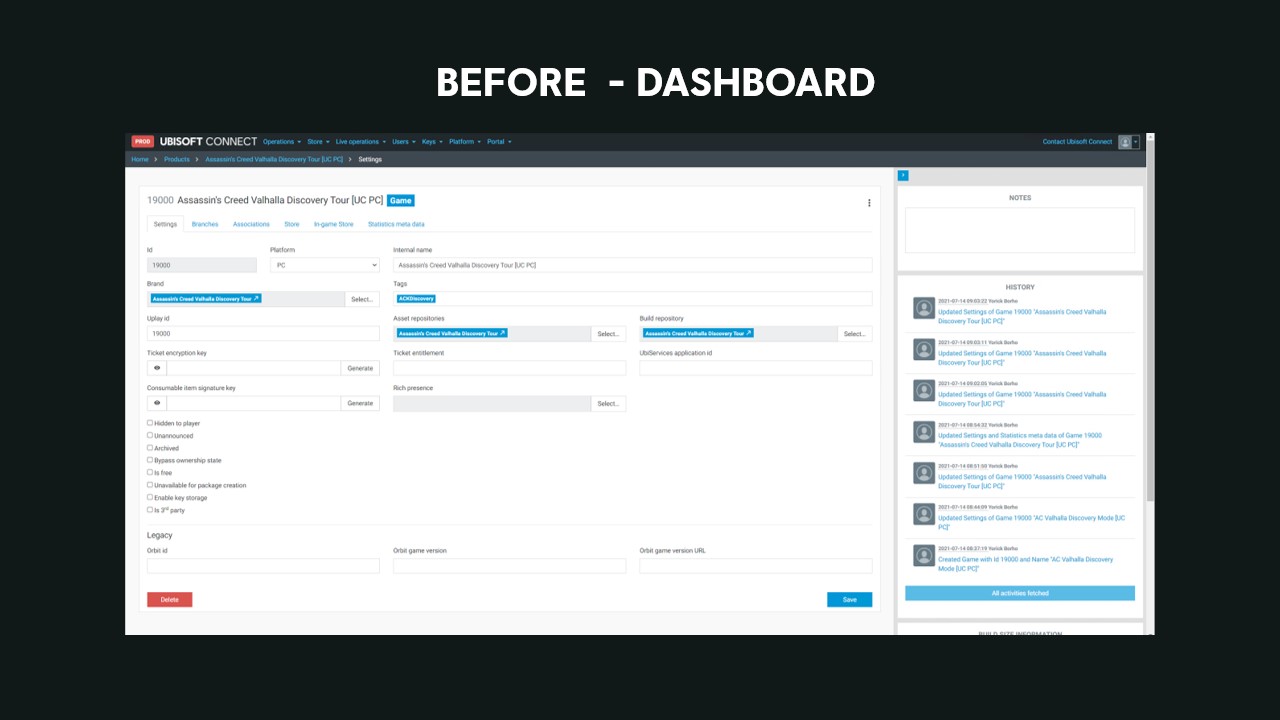
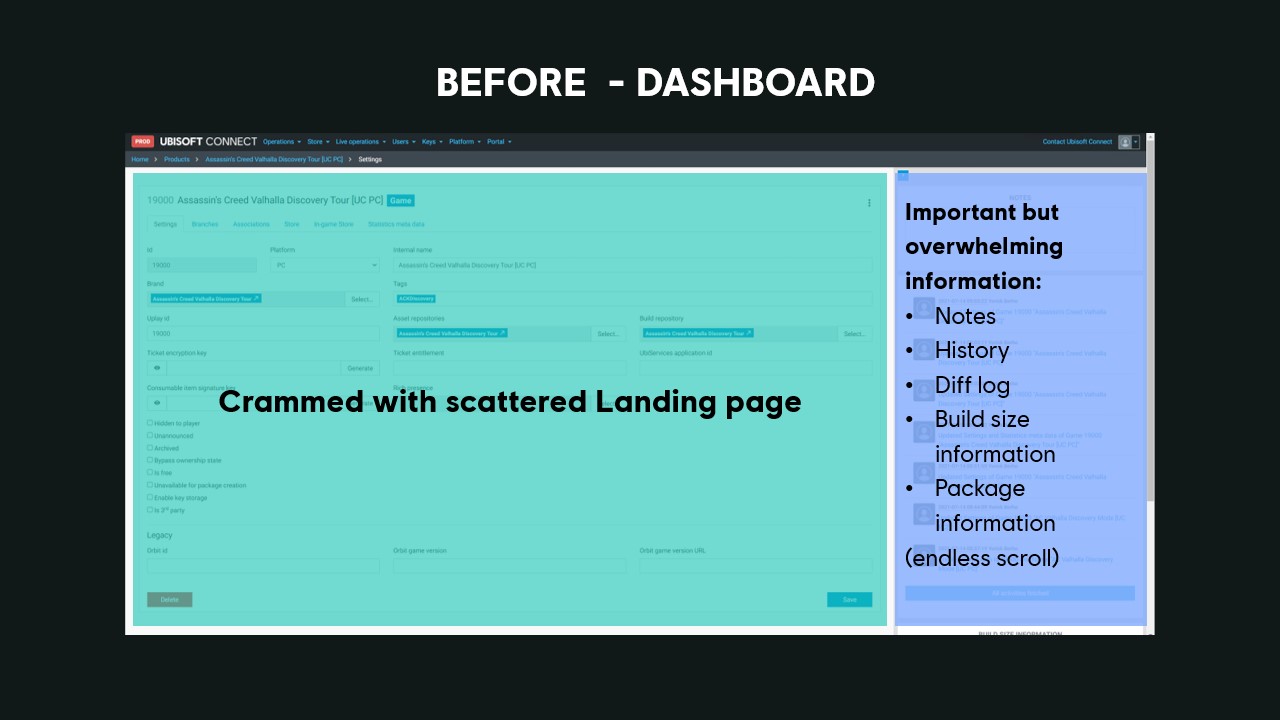
Previously, when creating/editing/inspecting a product, especially a core game product, users landed directly in the Settings editor—with no guidance and an overwhelming amount of information.
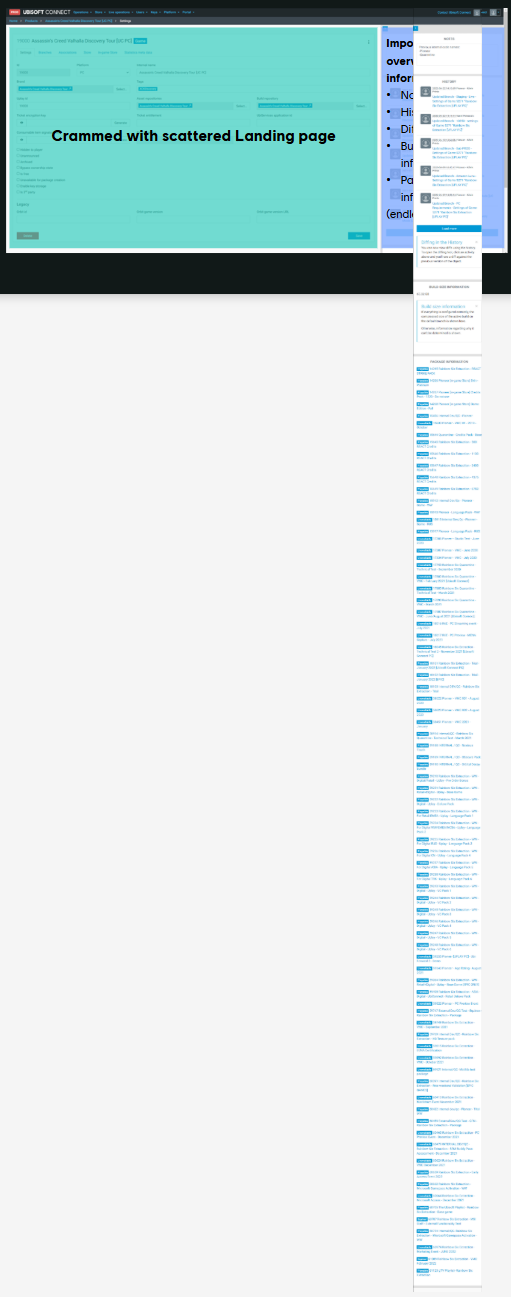
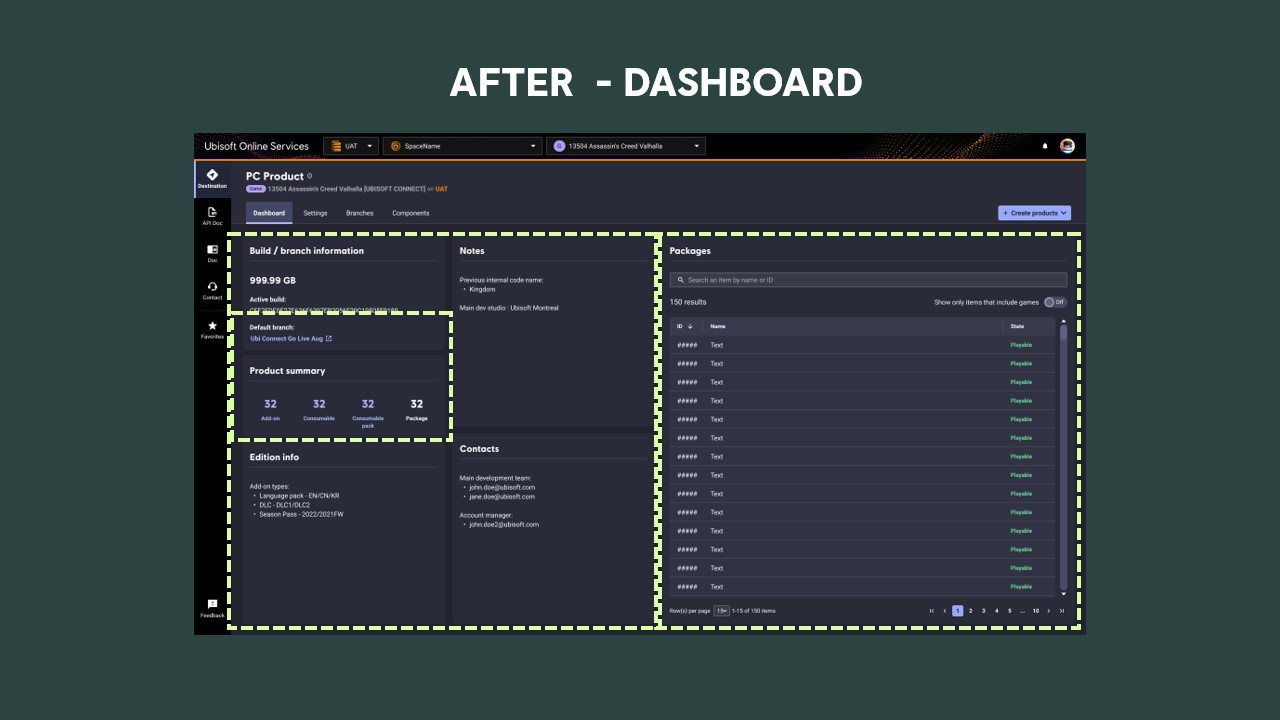
We redesigned the landing experience based on real user needs, highlighting what users actually need to see first.
Key information now lives in a focused dashboard—easy onboarding, quick links, and a clearer structure.
Especially, information about the package list that includes the selected game product is a long-awaited improvement, so our users can debug faster and no longer have endless scrolling.
Example #2: Game Products Management - Settings
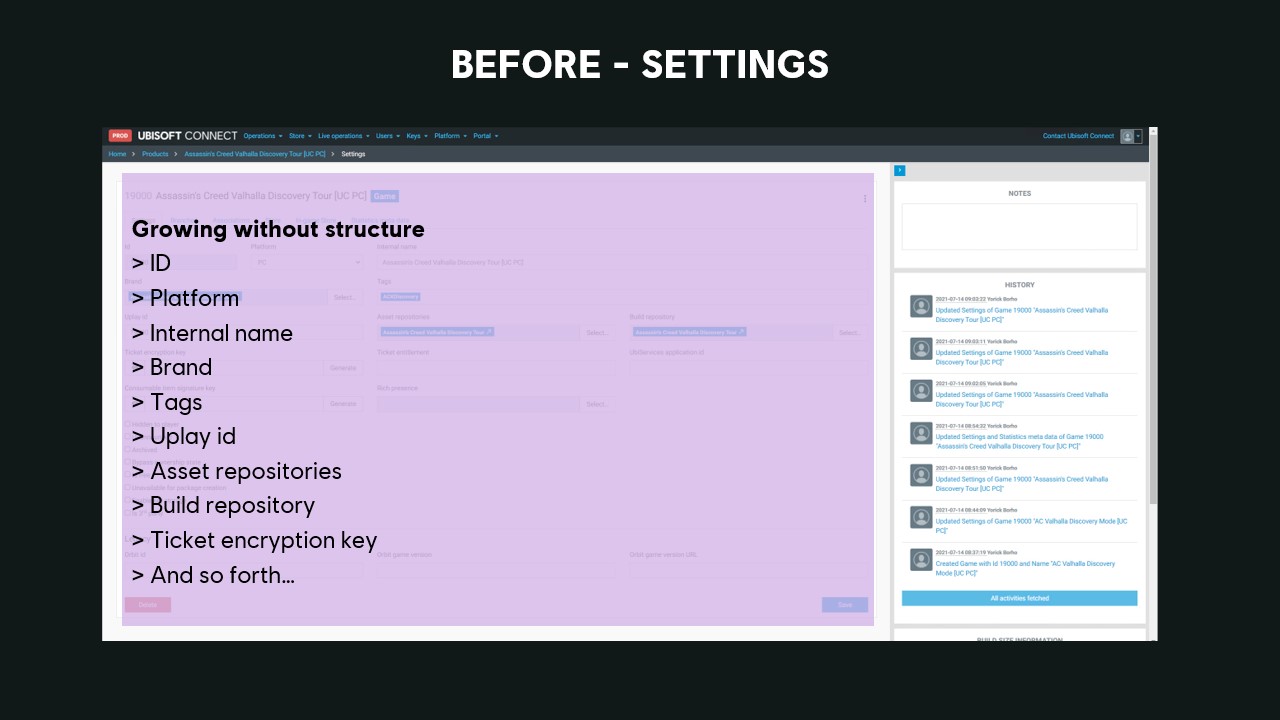
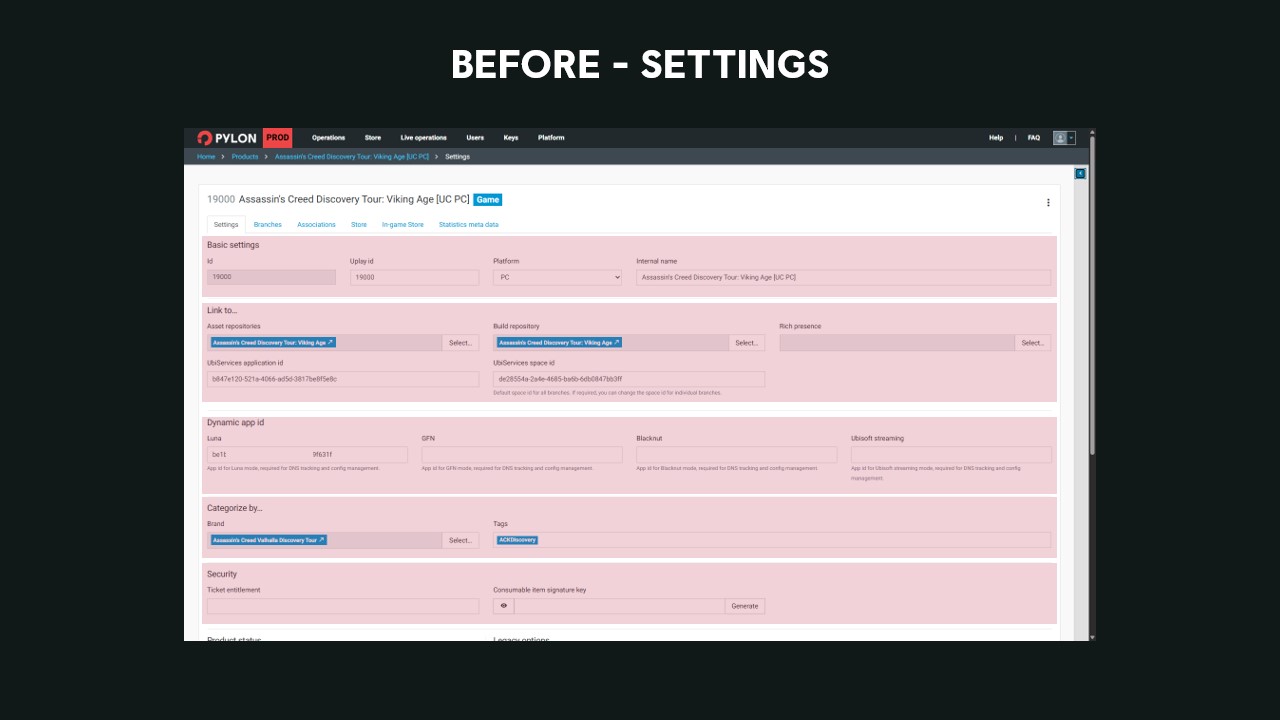
Product Settings page kept growing — new content fields piled up without a clear structure.
We improved the field grouping once, but users still struggled with:
edit conflicts (Accidental overrides) and unclear permissions on who could view or change what.
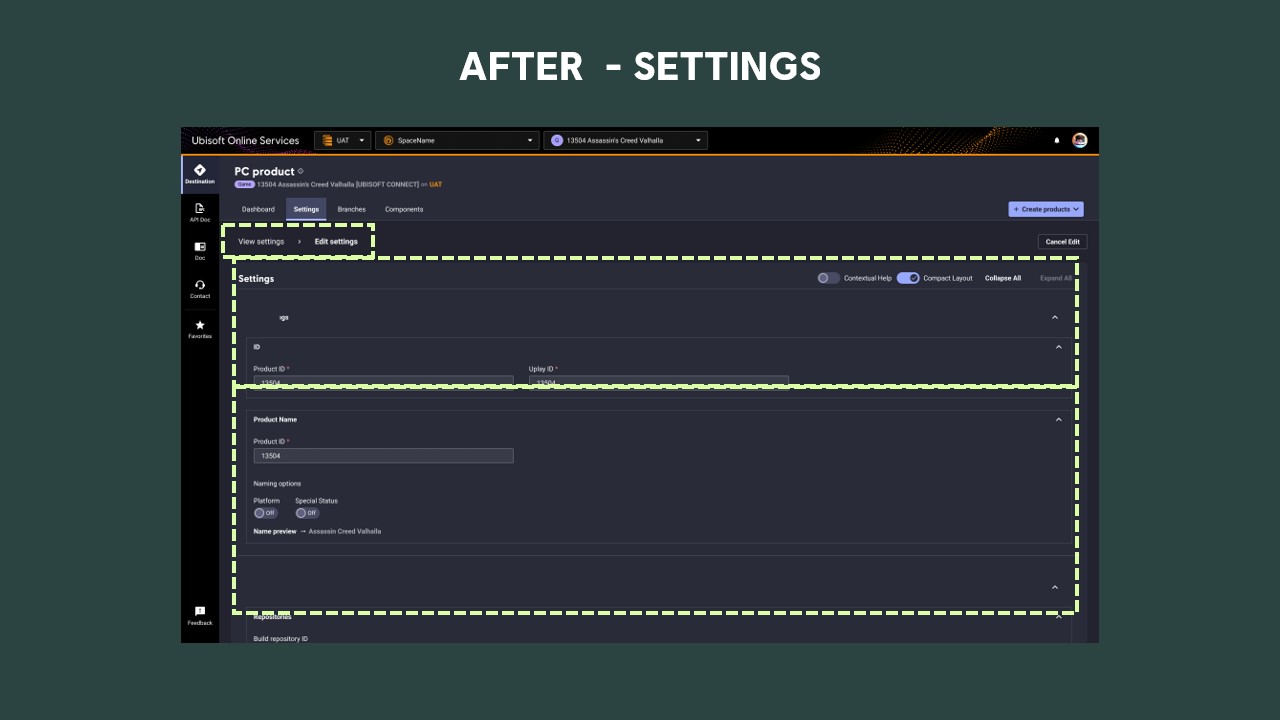
In the revamped version, we brought clarity with structured sections and clear priorities.
View and edit modes are now split, reducing edit conflicts and providing clearer boundaries for each permission.
A safer map, even for the complex settings.
Example #3: Game Products Management - Creation
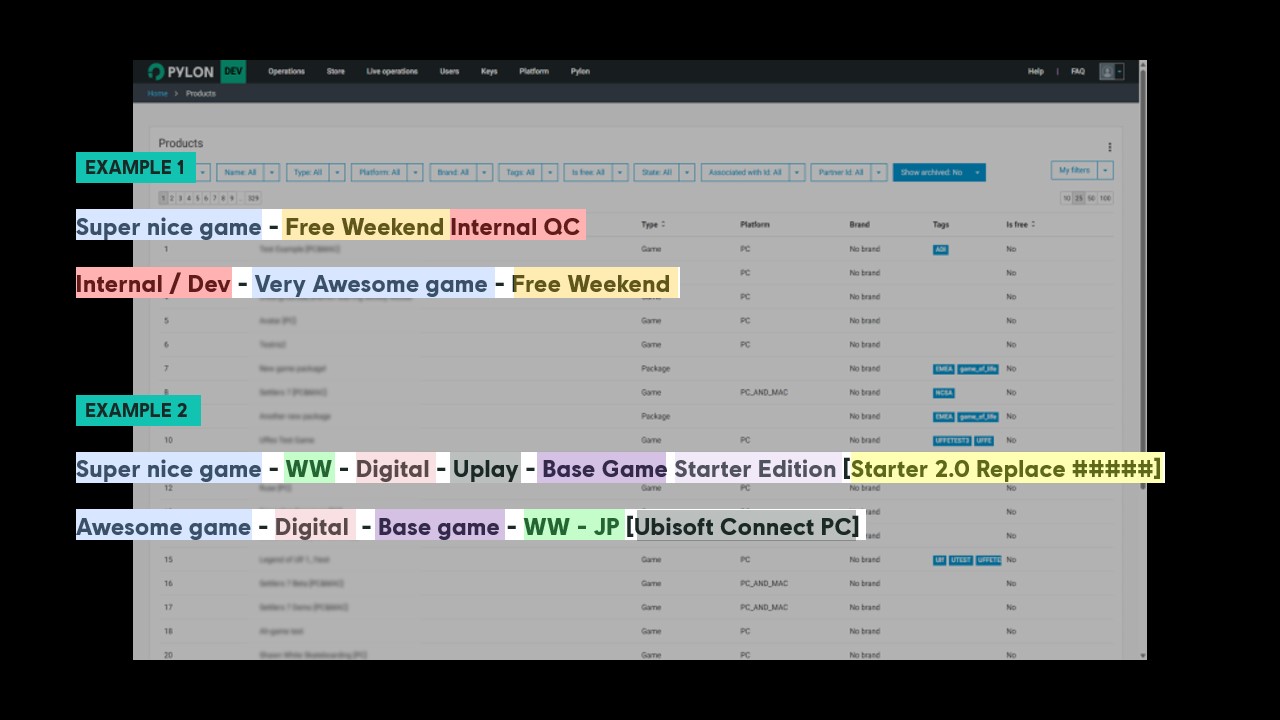
Considering we have over 20,000 products in our system, and more than 1,600 of them are game products in our production environment, there was no consistent format, no standard, and no shared rules across teams regarding naming products.
My colleague Mihyun discovered this big problem after research: over time, each team or individual made their own rules, product names became inconsistent, and it has become increasingly difficult to find the right product.
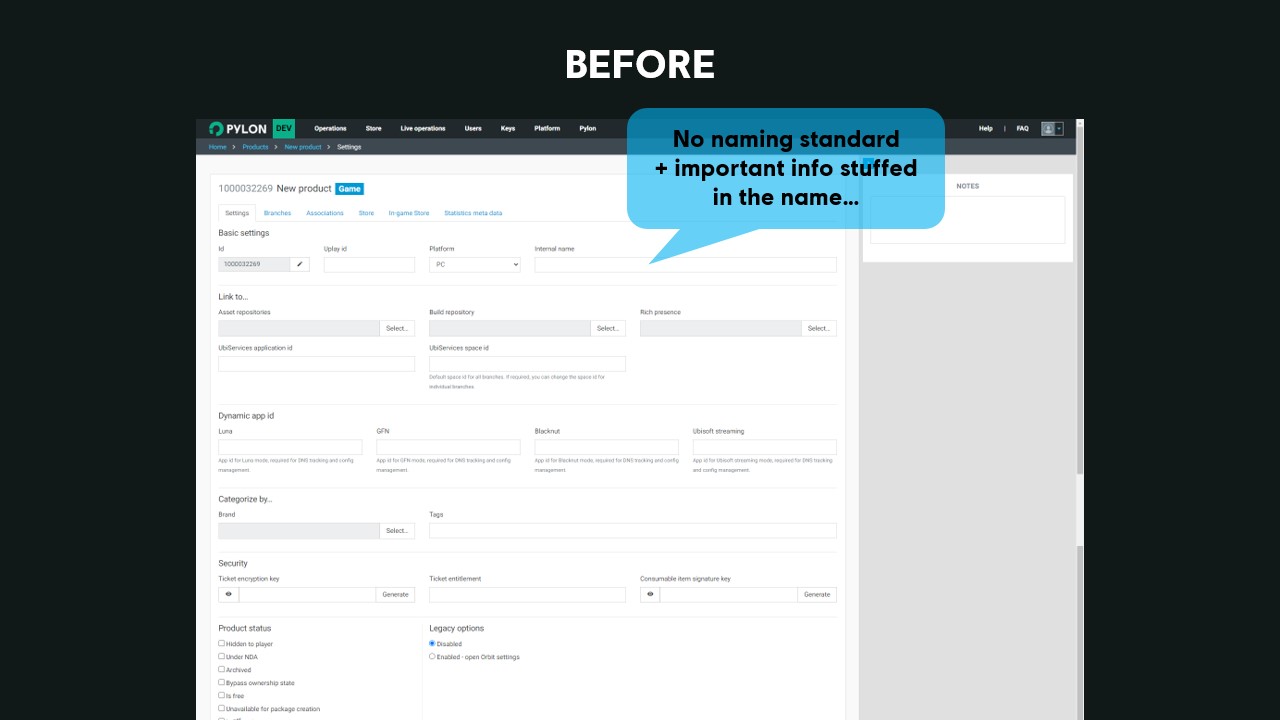
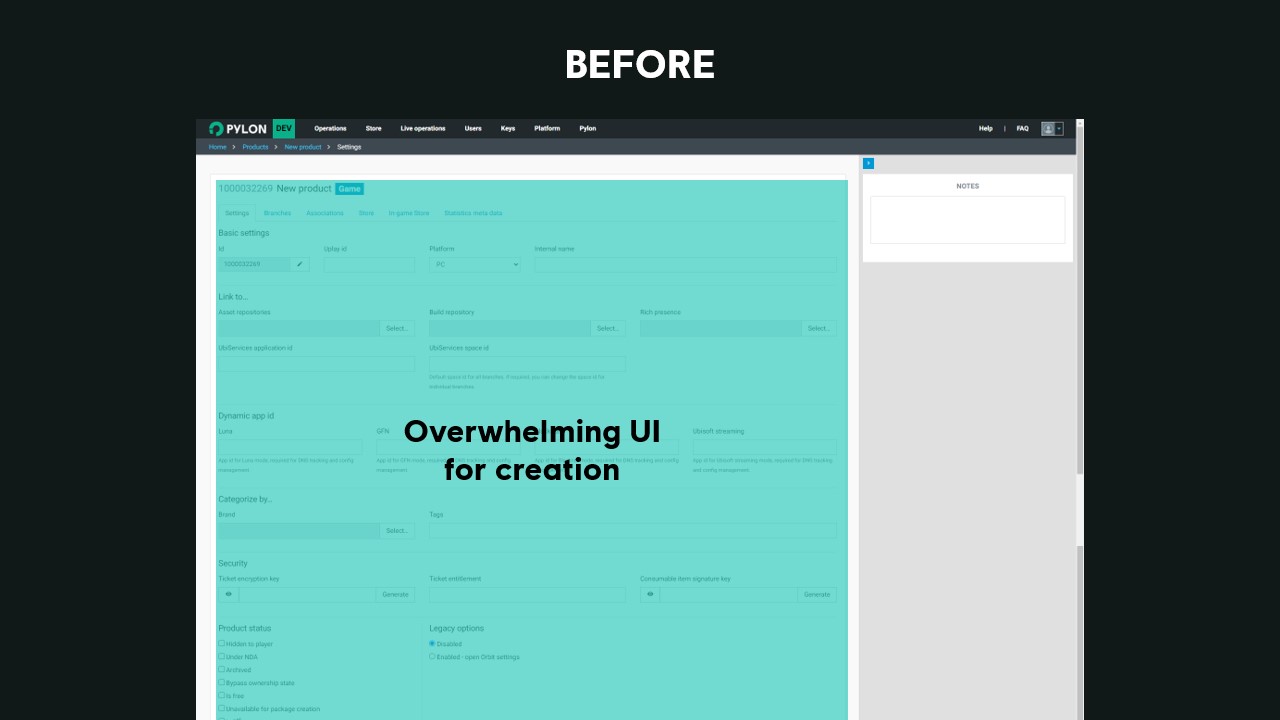
Also, when creating a new product in Pylon, way too many unrelated settings are shown all at once with the internal name settings, which makes it really hard to follow, especially for new users.
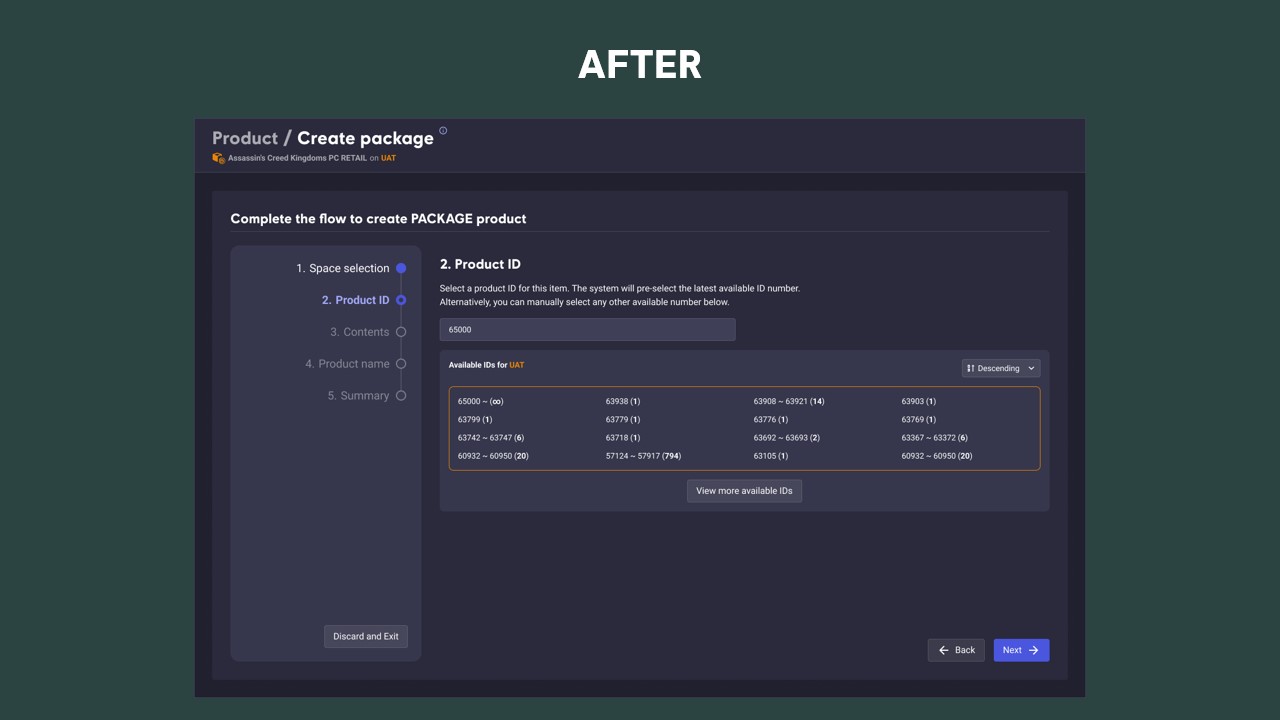
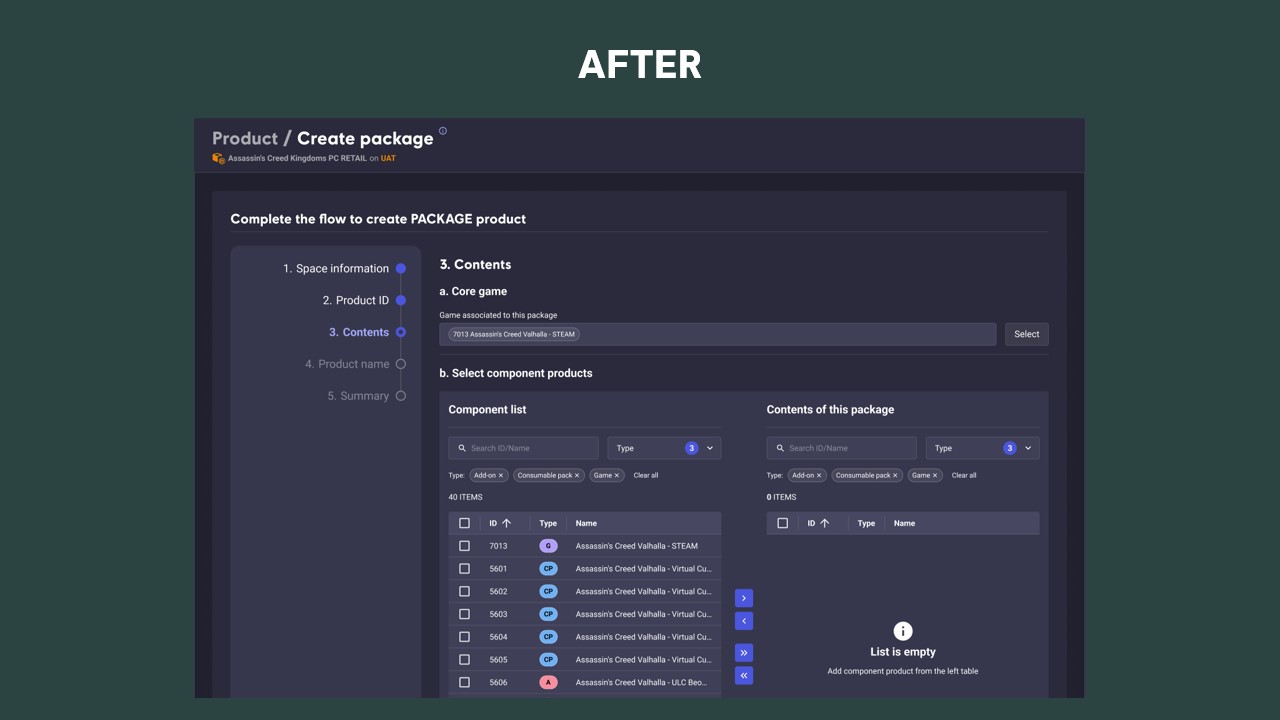
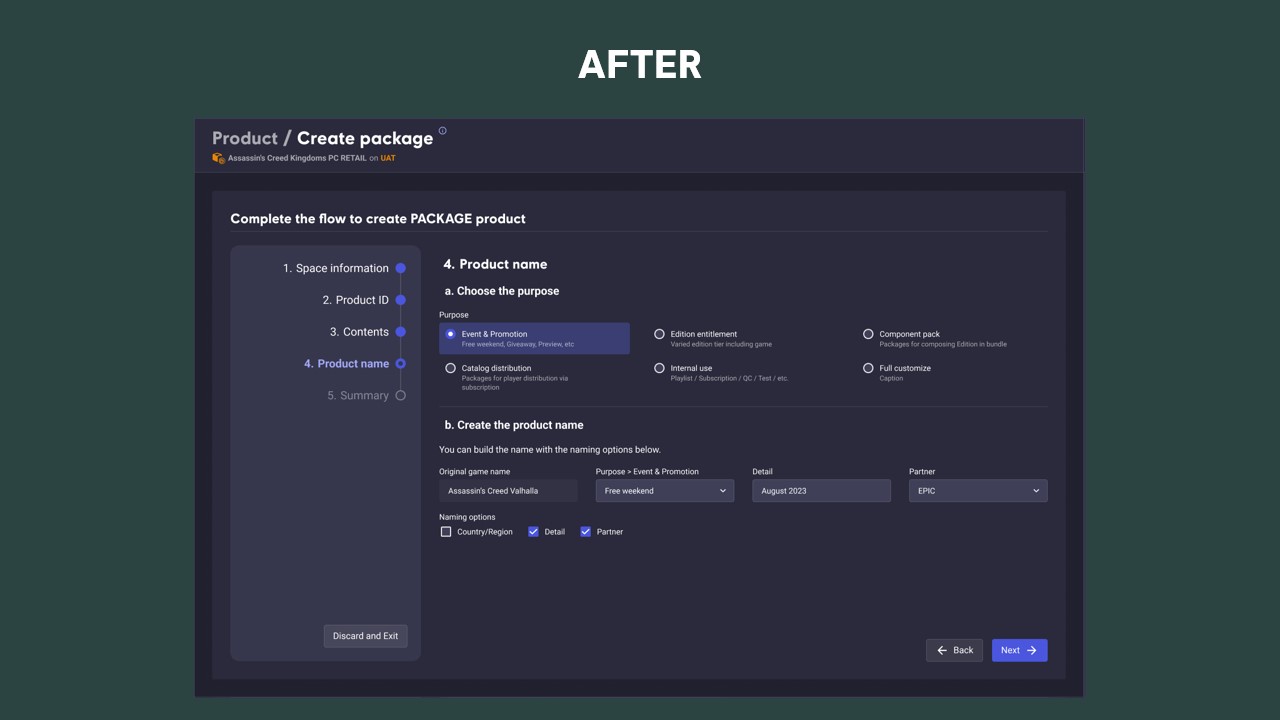
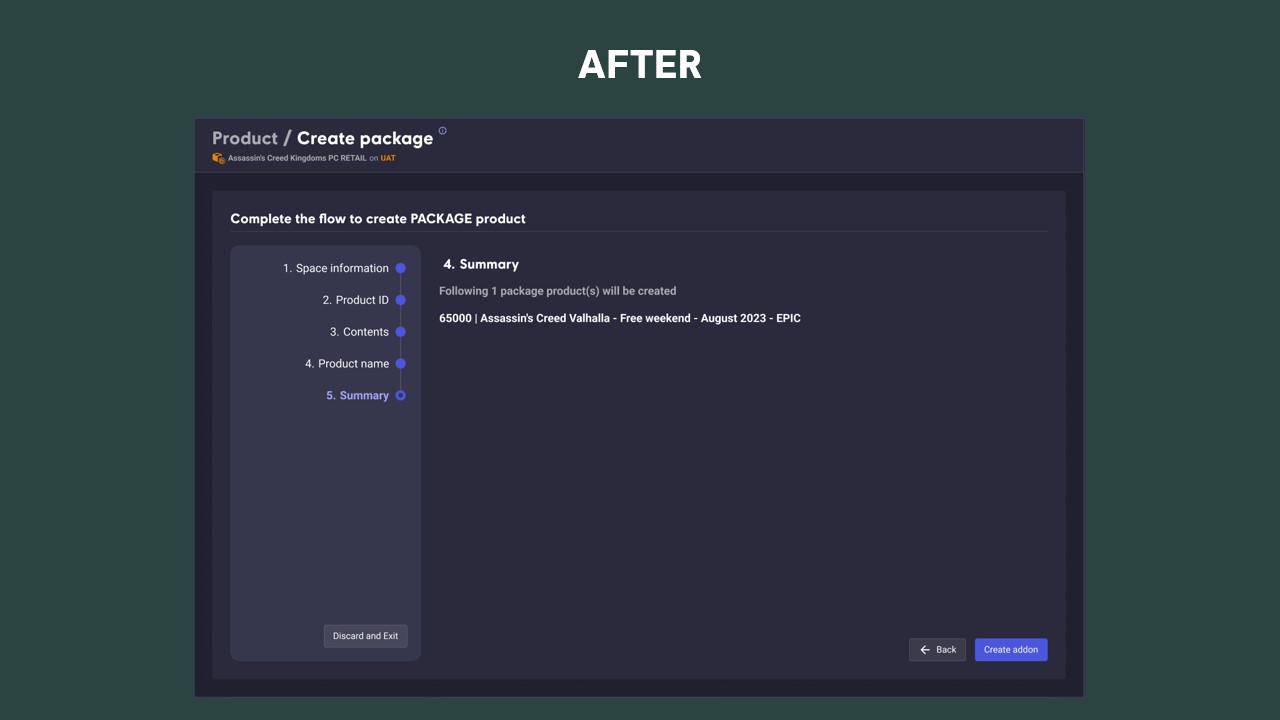
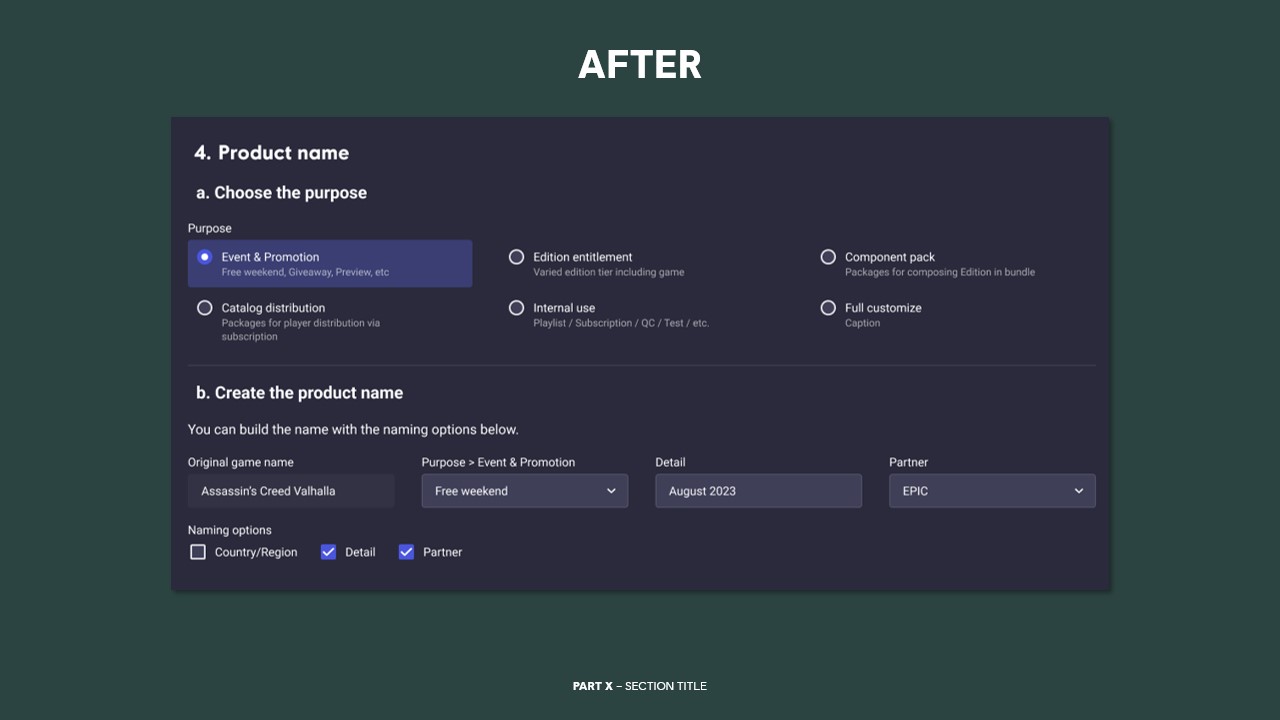
The revamped game product creation flow gives two clear goals:
- Easier onboarding: step-by-step guidance with what's needed. In the new flow, users can only see the information they need, exactly when they need it.
- Naming clarity: Thanks to Mihyun Ko and Dominic Lenz, Technical Director of Ubisoft Connect, who contributed to the product restructure and the new product naming rule convention, the new design offers structured naming standards, presets, and flexible input for edge cases.
From Clutter To Clarity
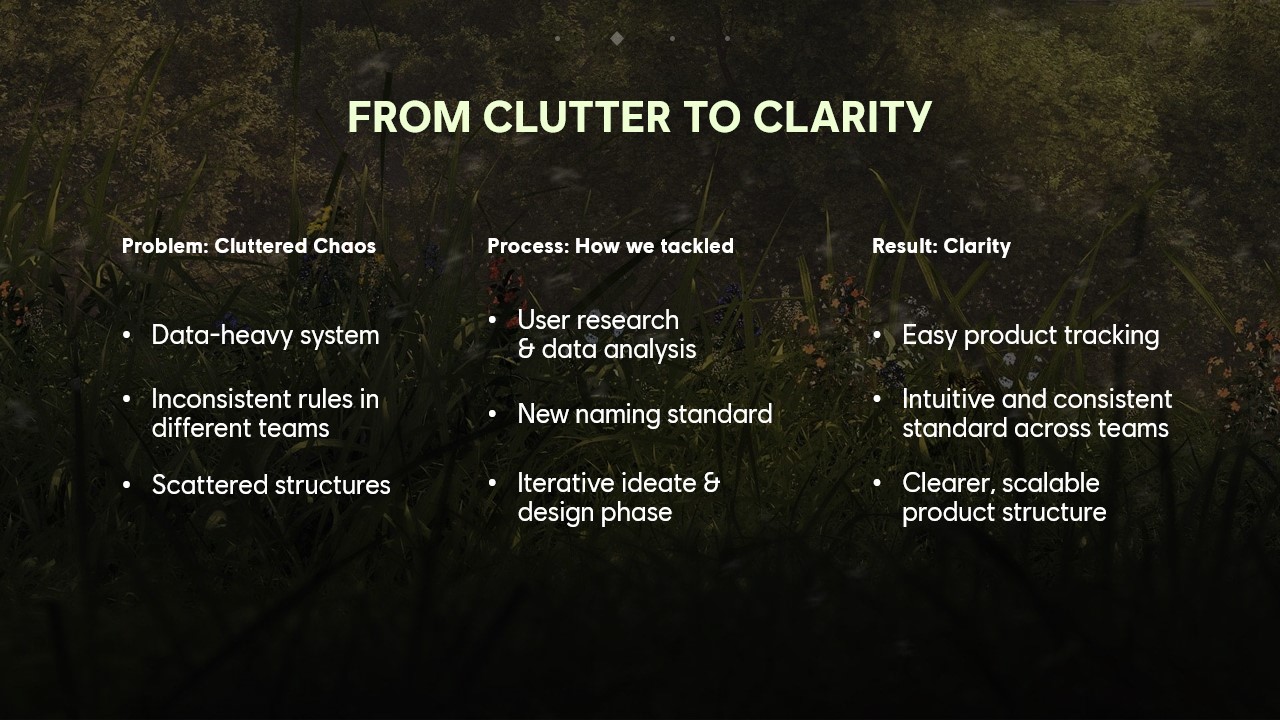
During this massive revamp initiative, we found a data-heavy system with inconsistent rules across multiple teams, resulting in scattered structures that made it harder to track and manage products.
To tackle this, we combined user research and data analysis, defined a clear naming standard, and refined it through iterative design.
Although the initiative is still in progress, we expect users to be able to track products more easily, following an intuitive, consistent standard and a clearer, scalable structure.
Other Curated Works

Cross-Platform AchievementsUnifying fragmented legacy systems into one cross-platform achievements ecosystem

Ubisoft PlaylistReducing support friction with a clearer sign-up flow that cut tickets by nearly 50%

Ubisoft Connect HomepageTurning a news-heavy launcher into a hub for games, content, and social activity

Game Build PropagationReplacing email-heavy handoffs with a centralized workflow for cloud game distribution

Uplay PCRefining core PC experiences and live operations for a platform serving 30M+ players

Blizzard KoreaDesigning localized online services and campaigns for players across Korea and Japan
© Daekeon Kim 2026